

This post may contain affiliate links. Please read our disclosure policy.
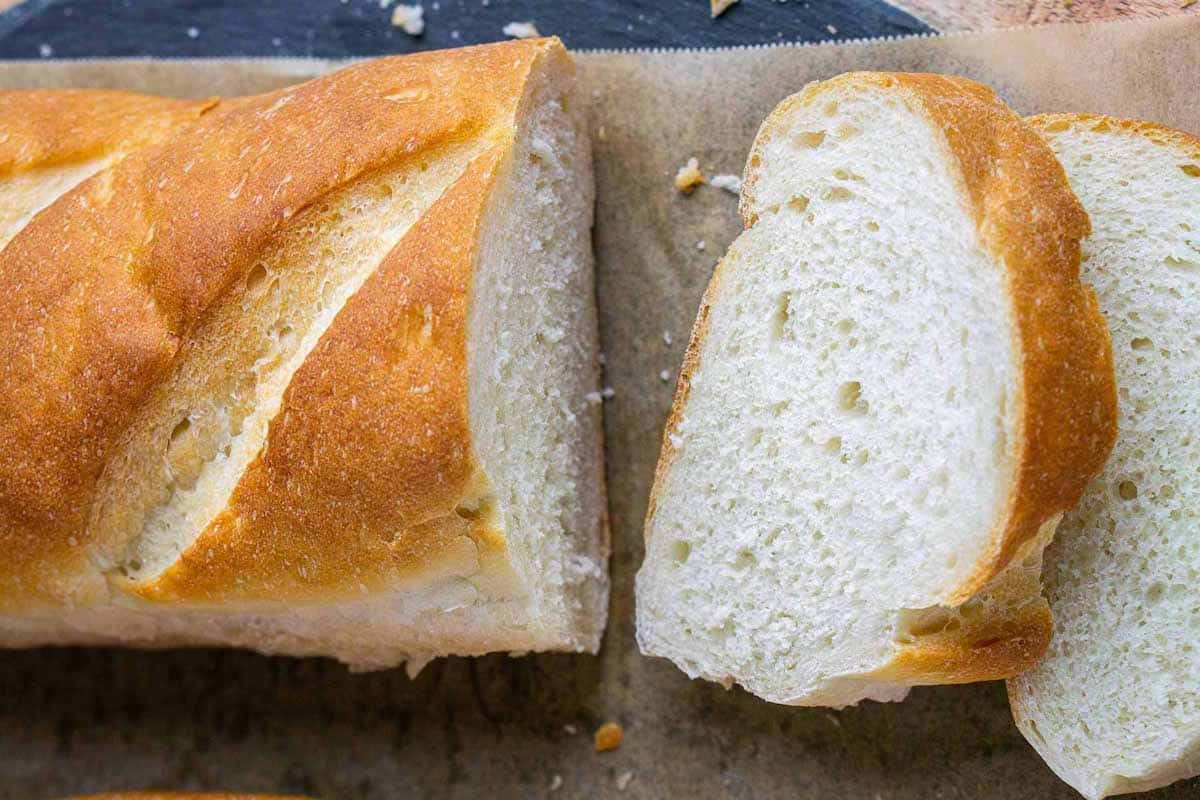
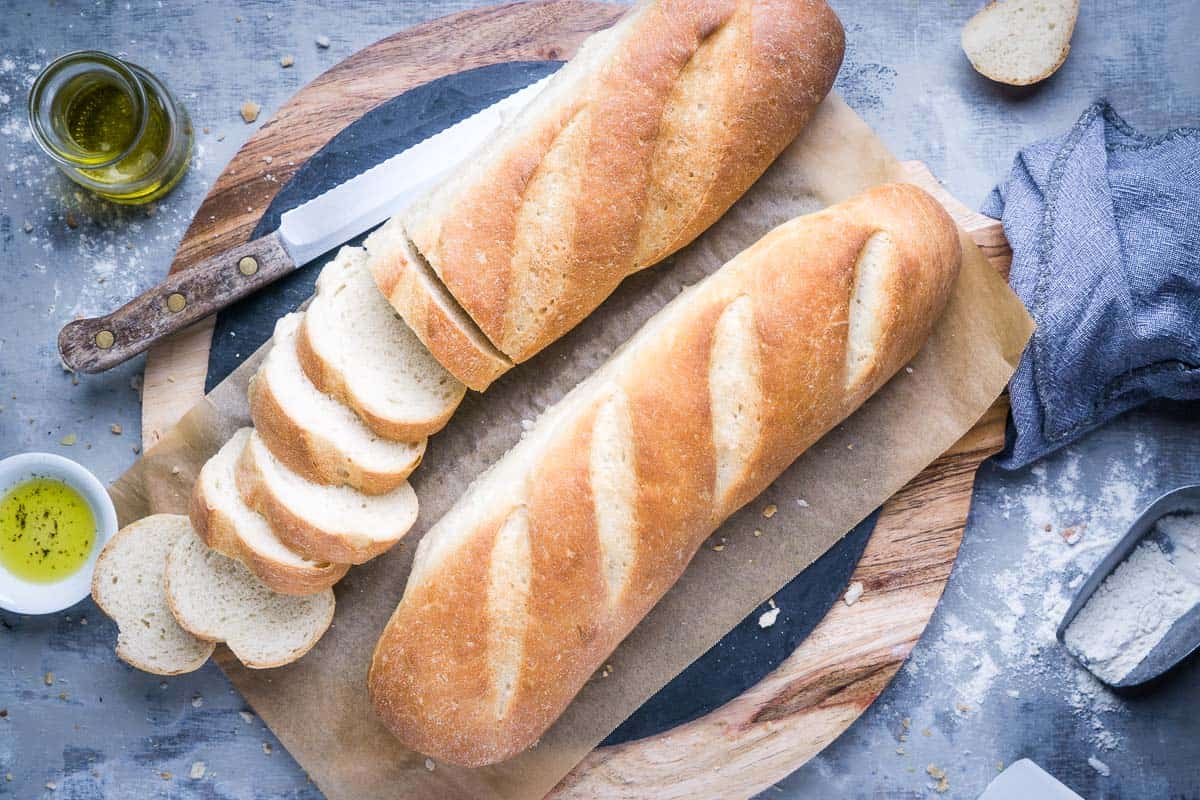
This easy French bread recipe uses only 4 ingredients and makes the best homemade oven-baked loaf. Learn how to make crispy bakery French bread right out of the oven that becomes soft and chewy as it cools.
Try my easy yeast rolls or garlic naan bread recipe next!

Want to Save This Recipe?
Enter your email & I'll send it to your inbox. Plus, get great new recipes from me every week!
By submitting this form, you consent to receive emails from The Kitchen Girl.
What is French bread?
This homemade French bread is made with flour, water, yeast, and salt. It can be mixed by hand or a stand mixer and shaped into your favorite form. Once baked, the crust is golden and crispy. As it cools, it becomes a super soft French loaf for anything.
Why you'll love this recipe
- Easy for any bread-baking level - This simple bread recipe is tried and trusted among bread beginners and skilled bakers.
- You need only four ingredients - Flour, water, yeast, and salt- to make French bread dough. Of course, you also need a tiny amount of oil to prevent the dough from sticking during the proofing phase.
- Two yeast options - This recipe includes instant or active dry yeast instructions.
- Two mixing methods - You can hand-knead the dough or use an electric mixer – both methods are included.
- Economical - The ingredients for this homemade French bread are a fraction of the cost of store-bought bread.
- Enjoyment - Making bread at home is fun and relaxing, especially when your whole house smells like a bakery.
How to make French bread
Here's a brief overview. Visit the printable recipe card below for detailed instructions.
- Combine water and yeast and bloom yeast if needed.
- Add flour and salt.
- Mix and knead the dough.
- 1st proofing - This means allowing the dough to double in size. You can even proof dough in the Instant Pot to accelerate this process.
- Deflate and reshape to prep for 2nd proofing.
- 2nd proofing - This is optional but recommended for gluten development.
- Deflate and shape dough into a baguette, oval, round, or loaf.
- Final proofing - This means allowing the final form to expand before baking.
- Bake the French loaf.
- Cool and store.
Stand mixer bread vs hand kneaded bread
This soft French bread recipe can be easily kneaded by hand or with a stand mixer. Depending on the batch size I want to make, I bounce between both mixing methods. So, I included instructions for both methods in the recipe below.
How to knead French bread in the stand mixer
I use my 5-quart KitchenAid stand mixer for this bread recipe, which yields about 2 pounds of dough. This size is perfect for my 5-quart mixer with the dough hook attachment because it mixes and kneads without any delay. The mixer struggles with smaller batches because the attachment can't reach the ingredients to gather and knead the dough effectively.
To mix dough in a stand mixer, secure the dough hook attachment. Use the lowest speed to mix and knead ingredients into a cohesive, smooth, elastic dough (about 3-5 minutes). Sprinkle reserved flour into the bowl as needed during the mixing process to prevent the dough from sticking to the sides of the bowl. You may also need to stop the mixer and pull the dough back into cohesion with a spatula or your hands.
How to knead French bread by hand
Hand-kneading - Knowing how to knead dough without an electric mixer is good. I usually hand-knead this French bread recipe when I make a half batch (1-pound dough yield) because my hands can incorporate and knead smaller batches more efficiently than the mixer.
To hand knead: Stir ingredients together (using a utensil or your hands) in a large mixing bowl until a shaggy dough forms. Transfer dough to a steady surface and hand-knead until a cohesive, elastic dough forms (about 3-5 minutes). Sprinkle the reserved flour in small amounts to prevent the dough from sticking to the table or your hands during the entire process.
Proofing
You can proof homemade French bread using different methods. Proofing bread in the Instant Pot is my favorite! It creates the ideal environment to proof at a constant temperature of 90 degrees Fahrenheit. It's so convenient because your dough doubles in size in only 45 minutes, even in a chilly or drafty environment.

French bread shapes
Shaping French bread is half the fun! You can shape a baguette, sandwich loaf, oval, or round. A baguette or loaf pan isn't required, but they help maintain shape and height, which is great for bread beginners, especially if your dough texture is loose.
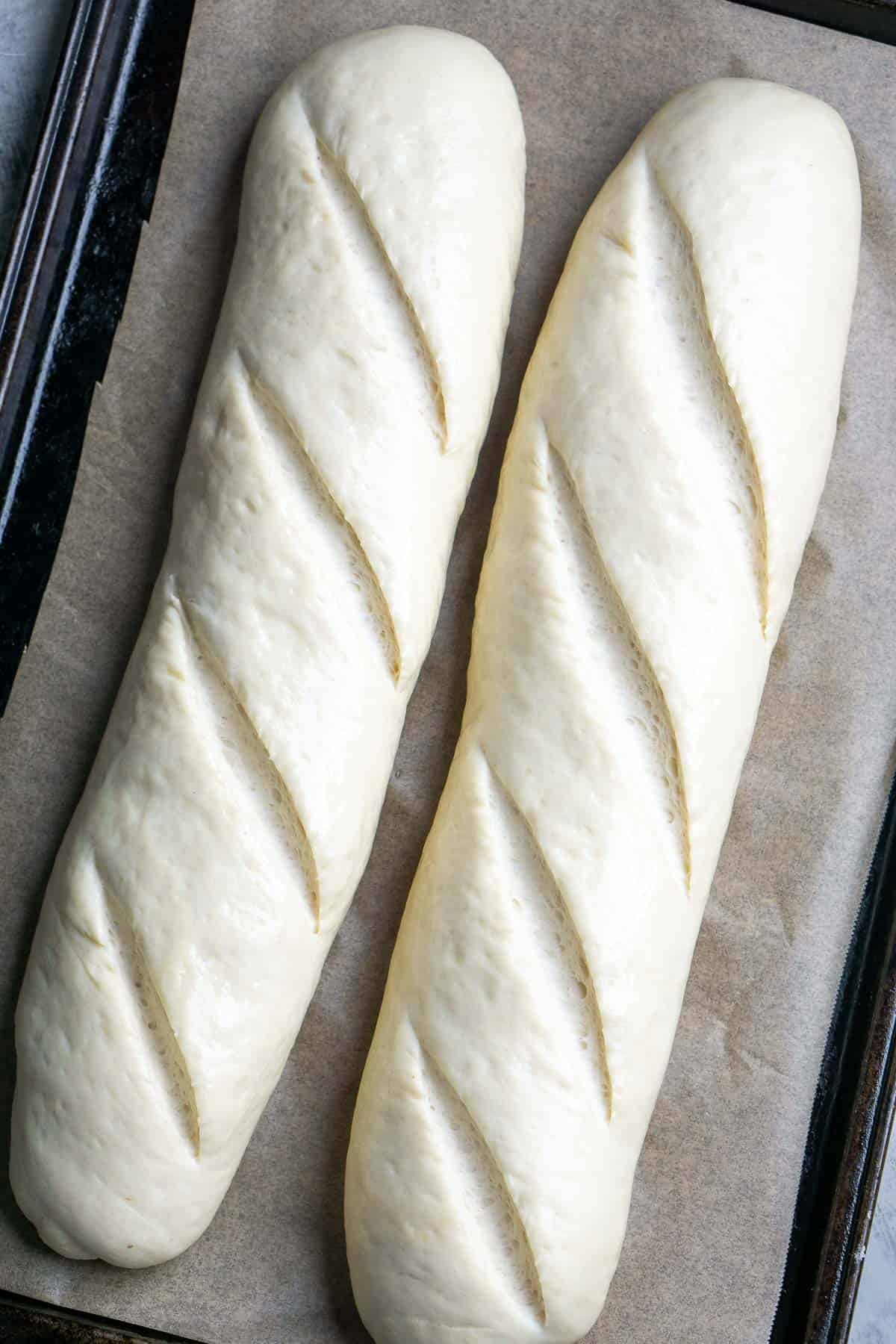
Here are some 'before and after' examples of my French bread shapes.
Free-form French Baguettes or long loaves. These long rolls have many uses. French bread also goes with a meat and cheese board.

French sandwich loaf in a loaf pan
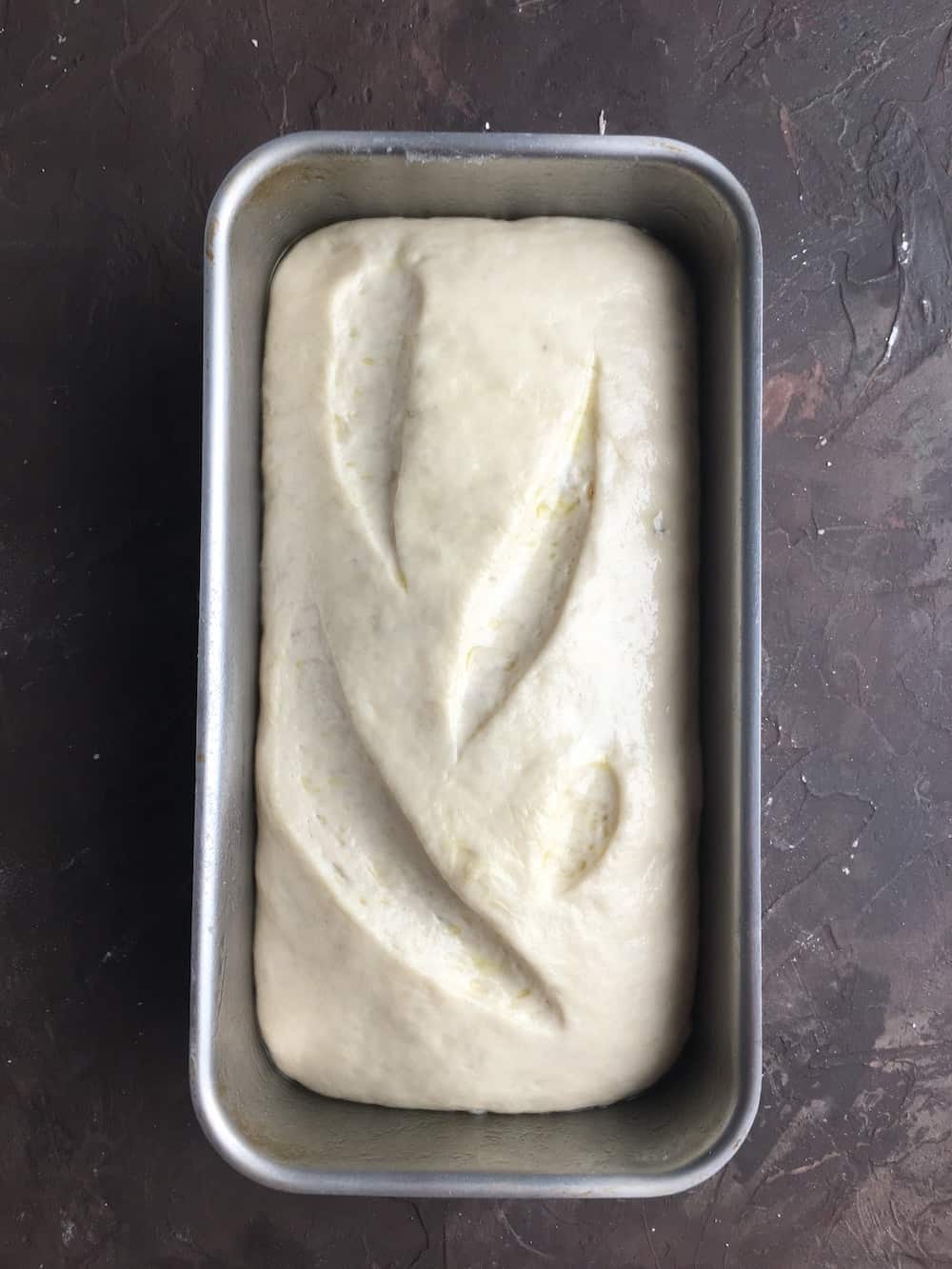
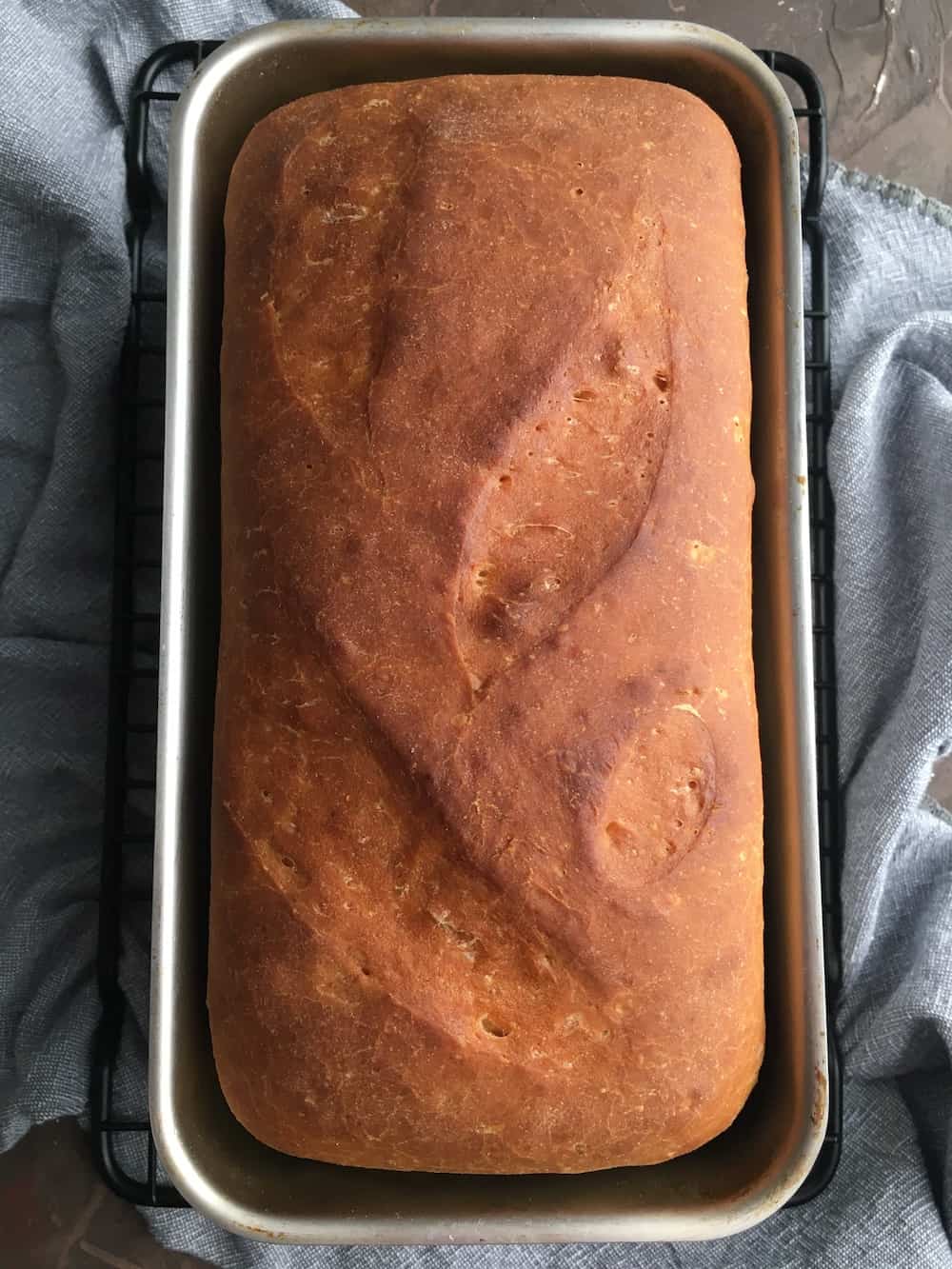
Free-form oval sandwich loaf on a mini baking sheet


Tools and equipment
These are the bare minimum bread tools needed for this recipe. I've included links to these and additional tools in the recipe card below.
- Mixing bowls - Use these to knead dough by hand and/or proof dough.
- Stand mixer - (Optional) You can also knead French bread by hand.
- Measuring cups and spoons
- Quick-read thermometer - (optional) Gauge water temperature and baked bread temperature.
- Dough whisk - Or any stirring utensil to combine ingredients
- Baking sheet
- Parchment paper - This helps prevent the bread from sticking to the bakeware.
- Bread lame - This scores the dough. A plain razor blade can also be used.
- Oven mitts - Use these for safe handling of hot bread and bakeware.
Looking for the best stand mixer for bread? Check out my feature comparison article and VIDEO: KitchenAid Artisan vs Professional 600 models.

Can you freeze French bread?
Yes! Allow the loaf to cool completely and freeze in an airtight bag or freezer-safe container for up to 30 days. Thaw in the refrigerator overnight or at room temperature for a few hours.
Recommended bread recipes
- How to Make Crostini
- No-Knead Focaccia Bread
- Homemade Croutons
- Easy Beer Bread
- Cranberry Walnut Bread
- Pull Apart Bread
- Best Bread Stuffing
- How to Dry Out Bread
How to serve French bread
There's nothing better than dinner served with fresh, homemade French bread. Grab any one of these mouthwatering entrees made for Instant Pot or stove!
- Lasagna Soup
- Chicken Pesto Pasta
- Instant Pot Chicken Alfredo
- Chickpea Kale Soup
- Split Pea Soup
- Instant Pot Spaghetti and Meat Sauce
- Sausage Soup
- Minestrone Soup
- White Bean Kale Soup
📖 Recipe

Easy French Bread
Want to Save This Recipe?
Enter your email & I'll send it to your inbox. Plus, get great new recipes from me every week!
By submitting this form, you consent to receive emails from The Kitchen Girl.
Note about scaling
When scaling, the light gray ingredient notes after the comma don’t change. Adjust as needed.
Ingredients
Yields about 1 ½ pounds dough (780 g)
- 1 ⅓ cup Water (315 g), see instructions for temperature
- 1 (¼-ounce packet) Quick Rise Instant Yeast, or 2 ¼ teaspoon Active Dry Yeast
- 1 ½ teaspoon Sea Salt
- 3 ½ cups Unbleached All Purpose Flour (440g), Reserve ½ cup of this (about 60g) to assist mixing
Instructions
- Prep the yeast water: Heat the water per package instructions: 110°F for active dry yeast or 130°F for instant yeast.Stir together YEAST and WARM WATER in a large mixing bowl. Rest for 5 minutes until yeast is foamy and activated (skip if using instant yeast).
- Mix the Dough: Add 3 cups of the FLOUR and SALT to the yeast mixture. Use any utensil to stir the ingredients until a shaggy dough forms.
- Knead the dough: Knead dough by hand (or at low speed in a stand mixer) for about 5 minutes until the dough is stretchy and smooth. Add small amounts of reserved flour to prevent the dough sticking to your hands or table surface.
- Shape and Proof the Dough: On a lightly floured surface, shape the dough into a round, tucking the sides under to form a seam at the bottom. Place the dough in an oiled bowl, seam side down. Cover and let it rise in a warm spot for 45 minutes until it doubles in size.Tip: You can proof the dough in an Instant Pot with the 'yogurt' setting.
- Deflate the Dough: Punch down the dough to remove air bubbles.
- Optional 2nd Proofing: For added texture and flavor, you can proof the dough a second time for another 45 minutes, though this step is optional.
- Shape Loaves: Turn the dough onto a lightly floured surface, press to release air pockets, and divide it into 2 or 3 equal portions.Shape each piece into your desired form (baguette, loaf, or round). Tighten the dough as you shape it.
- Preheat Oven and Prepare for Final Proof: Preheat your oven to 450°F. Transfer the shaped dough to a parchment-lined baking sheet or loaf pan. Cover and let it rest for 30 minutes.If desired, spritz the dough with water and sprinkle seeds like sesame or poppy seeds on top.
- Score and Bake: Score the dough with a razor or bread lame, making ¼-inch slits across each loaf. Bake for 20-25 minutes, rotating halfway for even browning. The bread is ready when golden brown and the internal temperature reaches 190–200°F.
- Cool down: Let the bread rest on a cooling rack for 5 minutes. Then, remove from the pan and cool completely before slicing to retain moisture.
- Storage: Store the cooled bread in a plastic bag or airtight container for up to 2 days at room temperature or 5 days in the refrigerator.
Recipe Notes
Equipment
- mixing bowl or stand mixer bowl
- stirring utensil or stand mixer
- baking sheet or loaf pan or baguette pan
- parchment paper
- bread lame or razor blade to score the dough
- cooling rack optional
- instant-read thermometer optional
- digital scale optional
- dough whisk optional
- bowl scraper optional
Nutrition
Nutrition facts are estimates and may vary based on brands, ingredients, and portions.



Sol says
Hi, what type of modifications do I need to make this bread in high altitude?
Thank you-
Traci says
Hi Sol, sorry for not getting to your comment sooner! I don’t bake at high altitude, so I can’t offer tested modifications. However, I’d recommend checking a trusted high-altitude baking resource for guidance on adjusting yeast, flour, and rise times. Hope that helps! 😊
Alison says
Haven’t eaten the bread yet, but it rose and baked beautifully! This recipe was so simple, and looks delicious!
Traci says
Yayy!!! I'm so glad you're loving the process! Thank you so much for taking the time to leave this feedback - and for bringing my recipe into your kitchen. Enjoy your French bread!
Deborah says
it was my first time trying to make French bread. it was a lot easier than I expected. Thank you.
Traci says
Yayy!!! I'm so glad to hear that, especially that it was your first time making French bread! Thank you so much for taking the time to leave this feedback - and for bringing my recipe into your kitchen. Enjoy!
Franny says
As close to NOLA French bread as we’ve found! Comes out perfect every time and so easy! (we do add a tsp of sugar to activate the yeast, necessary?)
Great crust and soft and delicious on the inside. The best!
(Just wondering if you could post a GF version, or would that ruin its greatness?)
Traci says
Hi Franny! I'm so glad you're enjoying my French bread recipe. While sugar helps speed the fermentation, it is not a requirement for performance, as you can see in my photos. As for GF, you're welcome to experiment and let me know how it goes. Thanks so much for your feedback and enjoy!
Ali says
Great recipe. second recipe I tried and didn't care for the first one. This one came out perfectly. I have a stoneware four loaf mini bread pan and the recipe was just the correct amount of dough. Hubby and I split a loaf and now I have enough for a couple more dinners. let it rise twice and it was the softest bread I have ever tasted. no sugar added was a major sellers point.
Traci says
Yayyy!! I'm so glad you found your way to my recipe and went for it! It's been a favorite since my college days as a bread baker. I'm glad you love it as much as we do. Thanks for taking the time to leave feedback. I'm working on more bread-ie recipes, so stay tuned! Enjoy!
Jay-Dee says
Thank you so much for this delicious recipe!
I had just finished my very first attempt at Julia Child’s Beef Bourguignon,
And needed the perfect French bread to go with it. Magnifique!
Traci says
Well that's quite a compliment AND complement LOL. Thank you for going for it with my recipe. Glad you love it as much as we do! And thanks so much for the feedback - enjoy!
Kgomotso Rammala says
I so can't wait to try making the bread 😊
Traci says
Oh awesome! Please let me know if you have any questions at all. I'm here for it. Thank you and enjoy!
Ken says
I'm a man and my bread came out better than yours. Ha Ha. Just kidding. It did turn out really nice. I added just a little Parmesan cheese. 1/4 cup with a little butter on top of the loaf. Yummy. Thank you for the recipe. So simple even a man can do it. 🙂
Traci says
Hey Ken! So glad you went for it and I wouldn't be mad if yours turned out better LOL and your additions sound delicious. Thanks for sharing your experience. Cheers!
John Robert says
130° is MIGHTY hot
Traci says
Hi John. Thank you, but the package instructions on my rapid rise instant yeast instructs to use liquids between 120-130 degrees Fahrenheit. Let me know if you have any questions. Cheers!
Ashley Cannuli says
I am not a confident cook, and an even less confident baker. I seem to always mess up breads in particular. A few hours ago I got a craving for French bread and did a quick Google. Of all the recipe previews I saw, yours looked the most visually appealing, while also looking approachable enough to learn more. I read the whole thing, pinned it, went down an hour long pinterest binge, and then circled back. Got the ingredients out, attached my dough hook, and got to work. I proofed the dough in a dishwasher that had been recently run so it was hot, humid and clean. Something must have gone wrong with the proofing, because they came out pale, flat and dense. Great aims- will try again!
Traci says
Hi Ashley, I'm so glad you found your way to my recipe and went for it. This outcome is usually attributed to 2 things. 1) expired or compromised yeast or 2) water temperature either didn't activate the yeast (too cold) or killed the yeast (too warm). It's so easy for either of these to happen, so I recommend trying new yeast and using an instant-read thermometer to confirm water temperature indicated in the recipe. I hope these suggestions are helpful and please keep me posted on any future endeavors 🙂 Thanks for sharing your experience!
Cindy says
looking forward to trying this! Just one question, do you not need sugar to activate the yeast?
Traci says
Hiya! You do not need sugar for this recipe. You're welcome to add a few tablespoons if preferred, but the yeast works perfectly without it in this recipe. Thanks for asking and let me know if I can help you in any way. Please enjoy 🙂
Vicki Ventura says
This is amazing bread! My husband and I ate the one loaf almost immediately. Have you tried doubling the recipe? My loaves were delicious but a little small.
Traci says
Yay! I'm so glad you went for it! This recipe makes 2 (1-pound) French bread loaves and you're welcome to double it. But, when using standard sized stand mixer, it's probably not big enough and you may have to just make two batches ... or knead by hand. Let me know if I can help you further. 🙂 And thanks for sharing your experience. Enjoy!!
Donna Wiltfong says
This recipe was truly EASY! The bread came out beautiful, soft and delicious! I can’t wait to make this again!
Traci says
Yay! I'm so glad you found your way to my recipe and went for it! I feel the same way every time I make it 🙂 Thanks for sharing your experience. Enjoy!!
JE Jeffres says
Forgot to slice the top before baking but it still came out wonderful!
Traci says
Yay! So glad you found your way to my recipe and went for it. Thanks for taking the time to let me know 🙂 Enjoy!!
Cassandra says
Made this yesterday and my kids had both loaves gone before it had a chance to cool! Making some more right now, hoping it lasts until dinner time! It reminds us of a bread that you would get at a steakhouse!
Traci says
Yay Cassandra! I'm so happy to hear this. I know there are many French bread recipes out there and I'm honored that you chose mine. I love that your kids signed off too – what a win! Thanks for the feedback. Stay tuned, because I have other, equally simple, yeast bread recipes coming. Let me know if you ever have any questions 🙂
Jessica L says
Can you refrigerate the shaped dough to cook fresh tomorrow?
Traci says
Hello and thanks for asking 🙂 Yes, you can refrigerate the dough for step 6 of the recipe. So, you would "Perform 2nd proof/rise" with the dough in the refrigerator (covered with plastic to prevent drying out). Then let it come to room temp the next day and proceed with step 7. Let me know if I can clarify anything else for you. Thanks so much! Enjoy!!
Marissa Vilchis says
As I have never made bread before snd got a stand mixer for Christmas I was looking for easy recipies. This recipe was relatively easy but wasn't sure on the final proofing time as it seemed like it didn't double in size. Also, when i baked it at 450, the bottom of the loaves burnt.. I guess practice makes perfect?
Traci says
Hiya, the final proofing time depends on the proofing environment. If your dough didn't double in size, then the environment was either too cold or the yeast didn't do its job (which can happen for various reasons). Also, baking at 450 shouldn't have had that effect. Did you by chance bake the bread on a stone or cast iron? Or did you happen to bake it longer than the instructions indicated?
Mia says
Hi. Would it be okay to use bleached all purpose flour? Thank you
The Kitchen Girl says
Hiya, yes you can use bleached flour in equal amounts. I prefer unbleached because it's more dense and has more structure, which makes shaping French bread easier. Let me know how it goes for you and feel free to send more questions my way 🙂 Enjoy!
Pat says
Do you turn your instant pot on or just put it in the pot and cover it??
The Kitchen Girl says
Hiya Pat, yes the yogurt setting and pot gets covered with a regular lid (or even a pizza pan). Here's the link to a detailed post about proofing dough in the IP 🙂 Let me know if you have other questions! Enjoy!
Leisel says
So good! I’m new to making bread and I didn’t go into this optimistically. This bread was soft yet chewy. A slight crisp on the crust. The flavor was amazing. I followed the directions as written. I kneaded in mixer about one minute then by hand the rest of the time. Magnifique!
The Kitchen Girl says
Yay, I'm so glad to hear it. Yes, this French bread comes out of the oven super crispy and gets soft as it cools. I often do the same as you with 1-2 minute mixing and then by hand because I love to knead dough. Thanks so much for taking the time to leave feedback. Cheers to homemade bread!!
Jennifer Locke says
I tried this today. I messed it up in the 3rd proof....it dried out too much, I didn't oil it enough, so it was denser than I liked...but the taste is perfect. I can't wait to try it again... tomorrow! Great recipe and great directions on your part. Thanks!
The Kitchen Girl says
Ok I'm glad you found the directions helpful. I'm not sure I quite understand what went wrong there but it sounds like you have a handle on it. Let me know if you have any questions and enjoy!! 🙂
Jeffrey says
I swear this smells like Subway French bread, which is awesome, but it tastes a million times better! This is how French bread should be made. Another winner!
Traci says
Yay Jeffrey! I'm so glad you're enjoying my recipe. Thanks for sharing your experience!
Jennifer Rodriguez says
I used this "new and improved" french bread recipe !! Good job Traci. My bread came out looking so GOOD, hard to wait for it to cool down though.
The Kitchen Girl says
Awww thank you so much, Jennifer...glad you enjoyed it. I totally agree about the waiting to cool down lol. Thanks for taking the time to leave feedback
Kathleen says
This was really tasty, much better than my old recipe. I did have a problem with it being sticky and loose, even though I added more flour. It rose beautifully the first 2 times but on the 3rd rise in the pan it expanded rather than rise. I will be making it again, I put a note on my printed recipe to use less water, do you think that might help?
The Kitchen Girl says
Hi Kathleen, yep...I recently tried to include metric conversion for this recipe and it threw off my numbers. I found the mistake and corrected it. Can you compare my current online version to your printed version? I think you'll find it easier to manage 🙂
Mary says
What setting do you use if you don’t have yogurt button?
The Kitchen Girl says
Hi Mary, people say they have used their sous vide function. I have not tested this bc I don't have that setting. This is the only method I've heard of that can work without overcooking the dough.