

This post may contain affiliate links. Please read our disclosure policy.
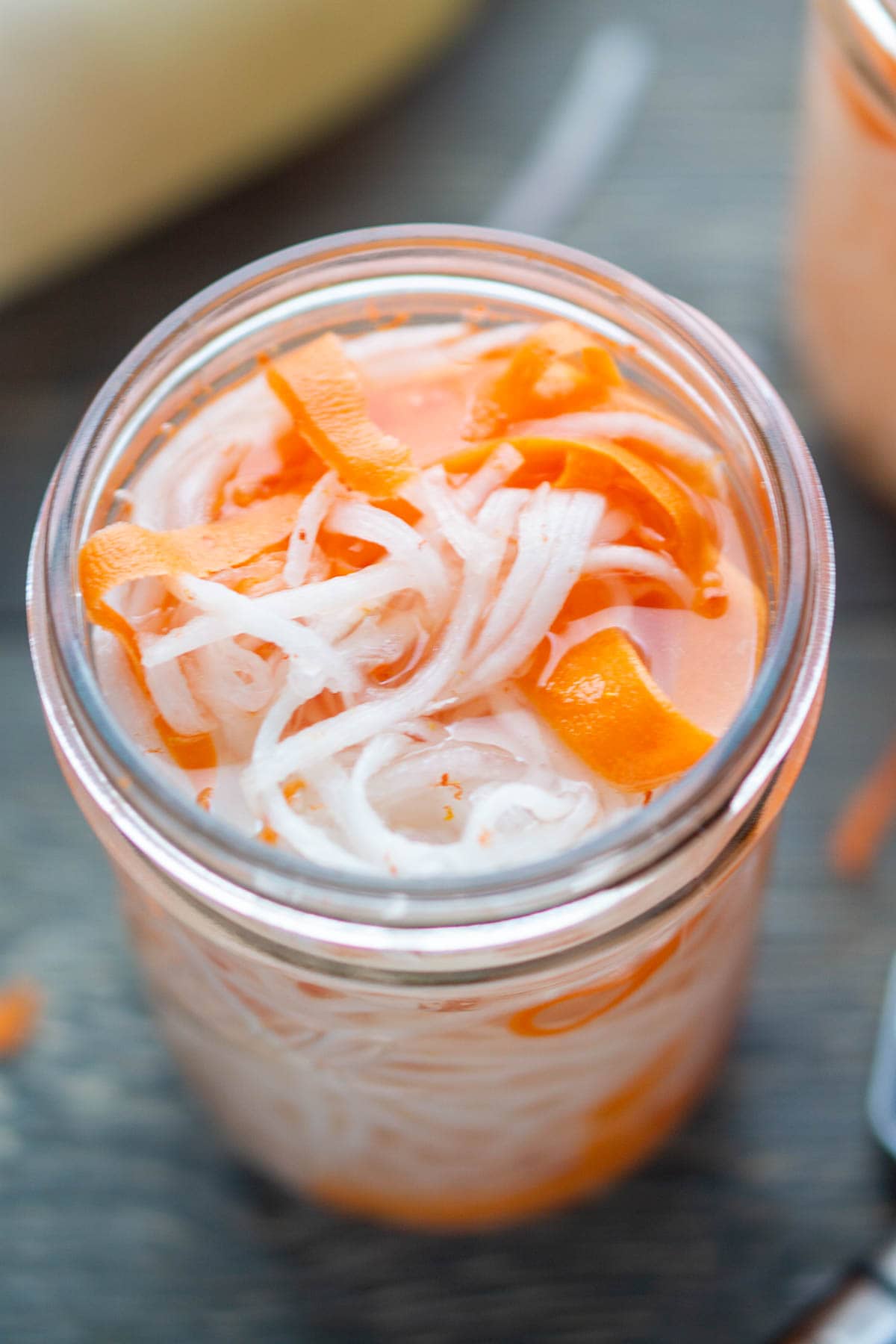
Quick pickled carrots and daikon, also called Vietnamese banh mi pickles, add sweet tangy crunch to Asian sandwiches, rice bowls, and noodles.
Want to Save This Recipe?
Enter your email & I'll send it to your inbox. Plus, get great new recipes from me every week!
By submitting this form, you consent to receive emails from The Kitchen Girl.
What Are Pickled Carrots and Daikon?
Quick pickled carrots and daikon are sweet and sour pickled vegetables commonly used on the Vietnamese banh mi sandwich. Just like my refrigerator pickled beets and refrigerator pickles, there's no canning needed! The carrots and daikon are shredded, stuffed in a jar, and soaked in a solution of vinegar, water, sugar, and salt. The vegetables gain their flavor from the brine—the longer they rest in the liquid, the better they get!
When you eat a banh mi chicken sliders, or my veggie banh mi bowls, no doubt you’re enjoying a gorgeous mix of flavors where your taste buds dance to the tunes of savory, spicy, sweet, salty, and sour. Quick pickled carrots and daikon make up the sweet and sour flavors in that gorgeous stack of ingredients.
Why You'll Love Banh Mi Pickled Veggies
- No need to use a hot water pickling and canning method. Quick pickled carrots and daikon are just that—quick pickled.
- Easy to make in 15 minutes and enjoy almost immediately—but they also get better by the day.
- You save money. A quart of these cost $5 at the Asian market—you make them for a fraction of the cost.
- Use them on ALL of your favorite Asian foods, including banh mi sandwich, salads, noodles, wraps, and more!
Ingredients You'll Need
- Carrots – Whole carrots work best here. Shred or julienne them yourself for better texture than pre-shredded.
- Daikon Radish – Mild and crisp, daikon is easy to find in most grocery stores. Look for one that's firm and heavy for its size.
- White Vinegar – Adds sharpness and brightness. You can substitute with all rice vinegar if you prefer a milder flavor.
- Unseasoned Rice Vinegar – Mellow and slightly sweet, this balances the sharpness of the white vinegar.
- Water – Helps tone down the acidity so the brine isn’t overpowering.
- Sugar – Adds sweetness to balance the sour notes. Any granulated sugar will work.
- Sea Salt – Essential for flavor. It ties everything together and helps draw out moisture from the veggies.
How To Make Quick Pickled Carrots and Daikon
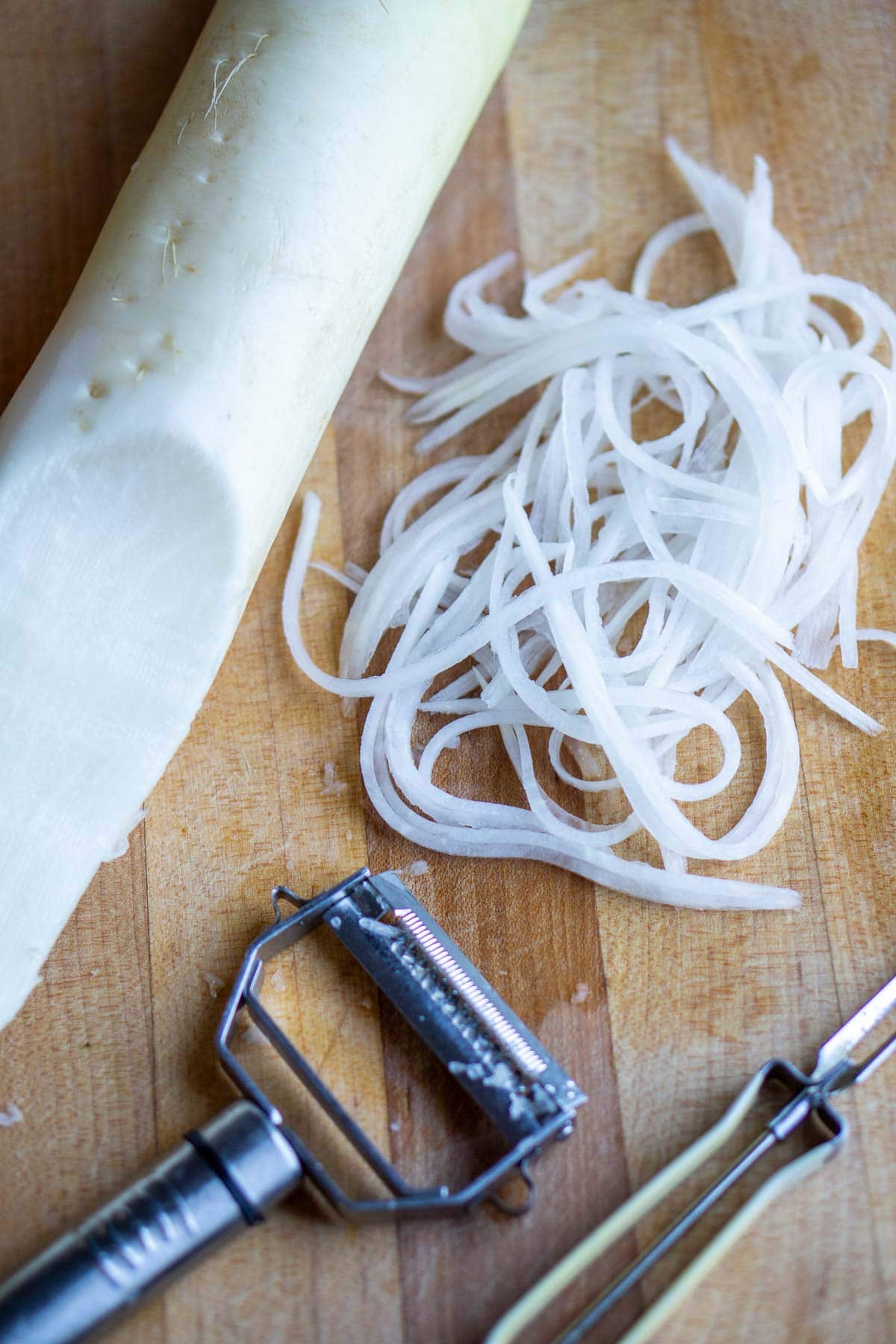
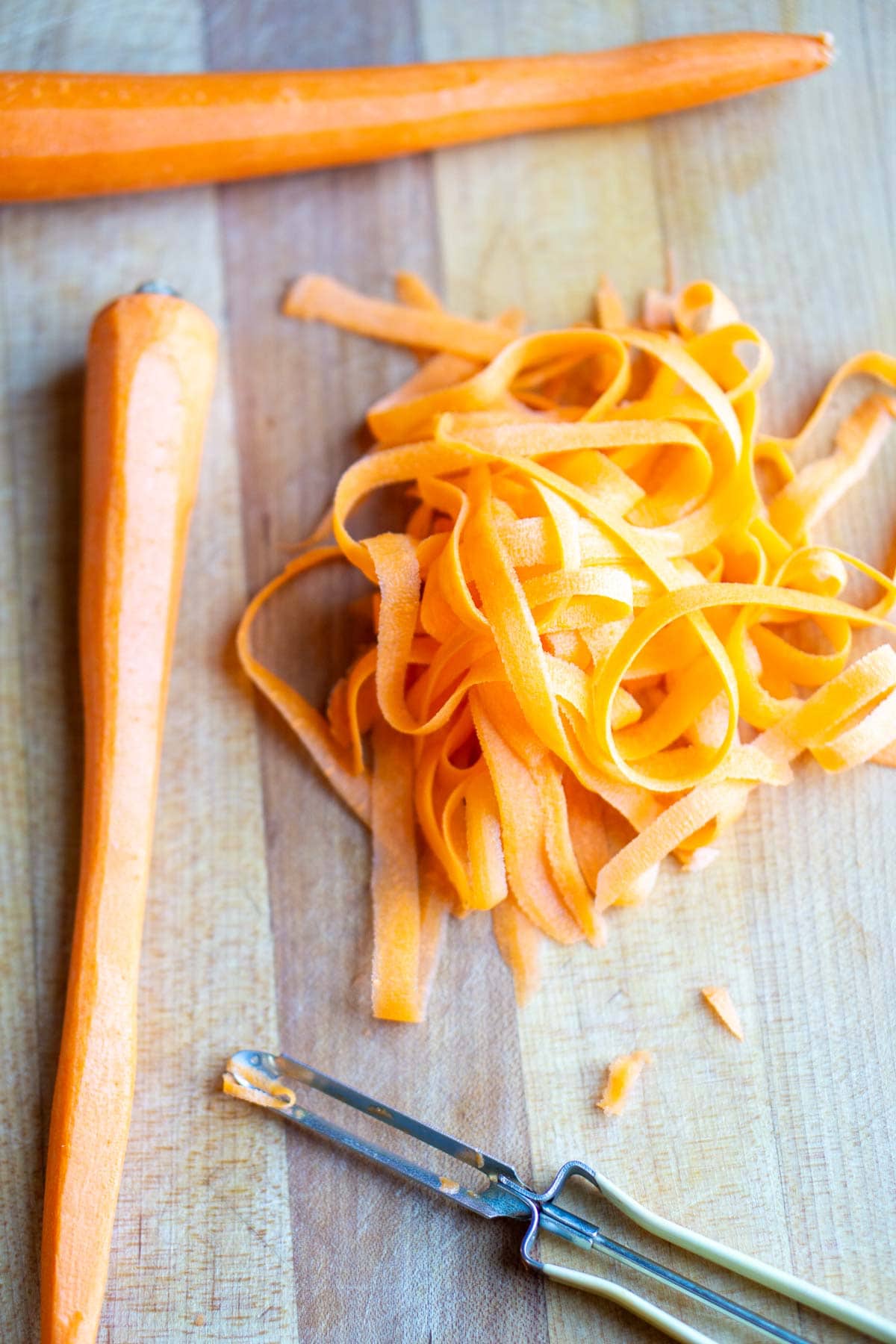
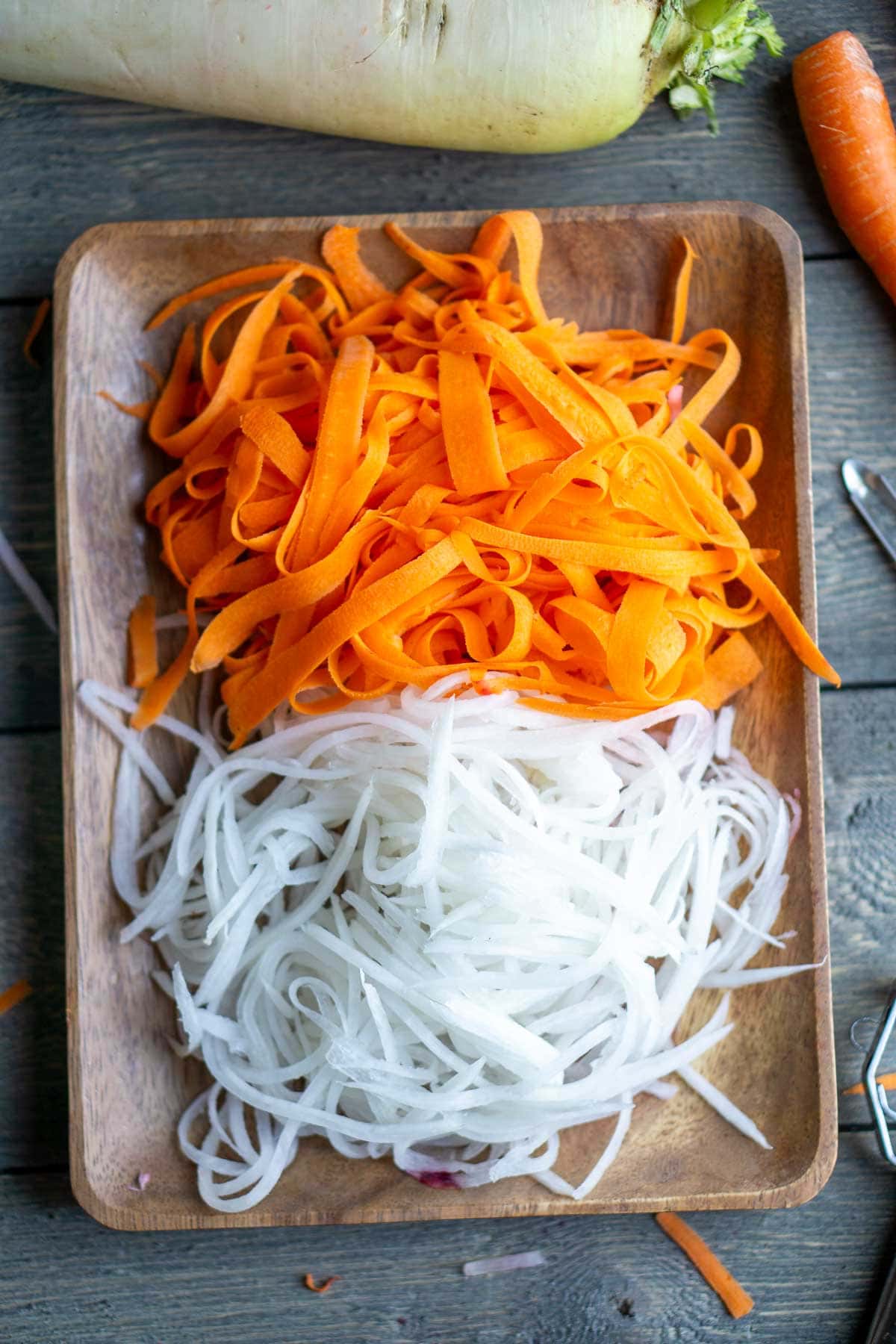
First, shred the vegetables with your favorite tool. Check out these perfect julienne cuts of daikon radish with that shredding tool! I use a standard vegetable peeler to make these carrot ribbons.
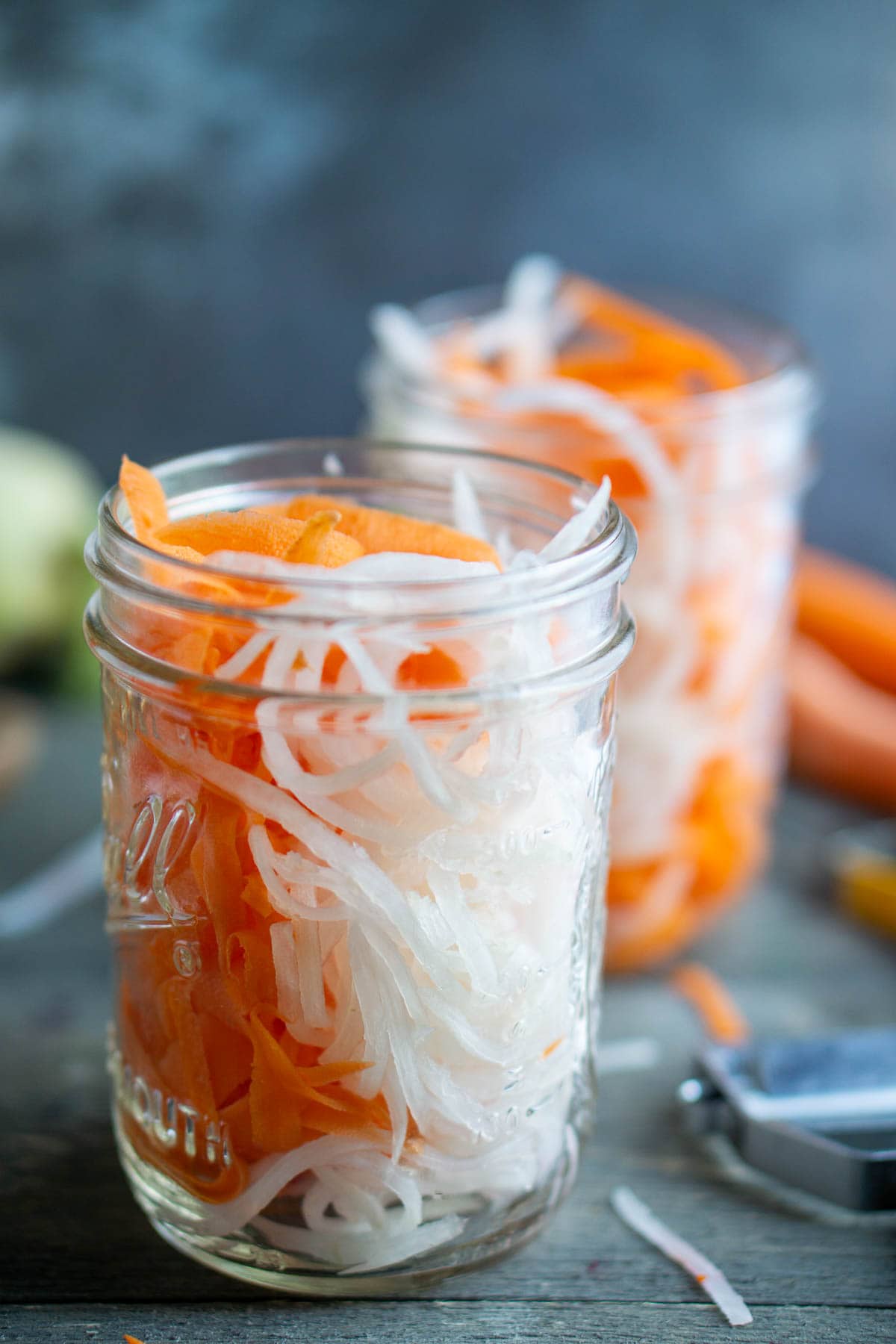
Stuff carrots and daikon into sterile mason jars. Note: these jars are for refrigerator storage—we are not canning this recipe.
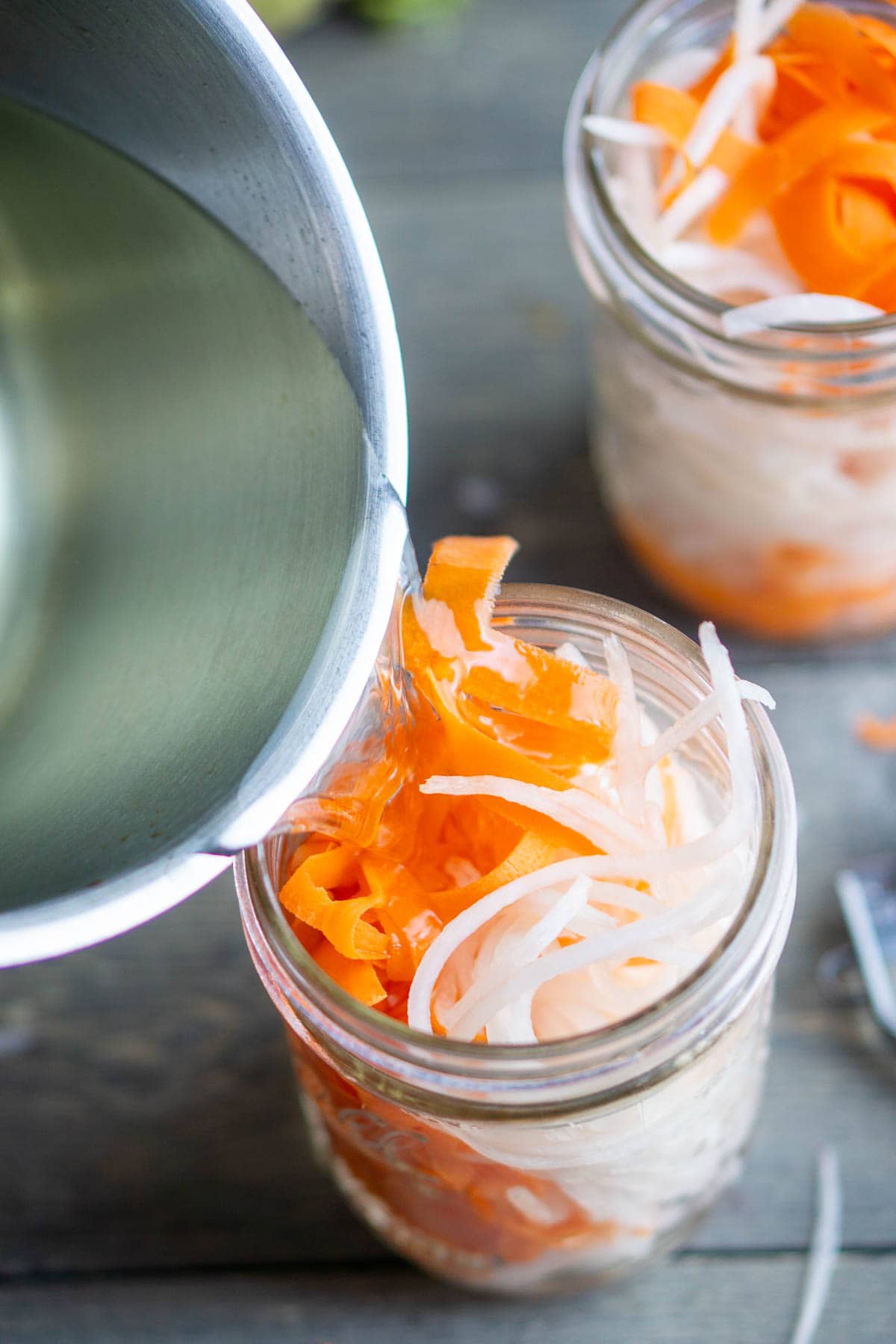
Boil vinegar and water, add and dissolve sugar and salt, then pour over veggies in jars. Alternatively, you can use the microwave option by heating the liquids in a microwave-safe bowl, stir in sugar and salt until dissolved.
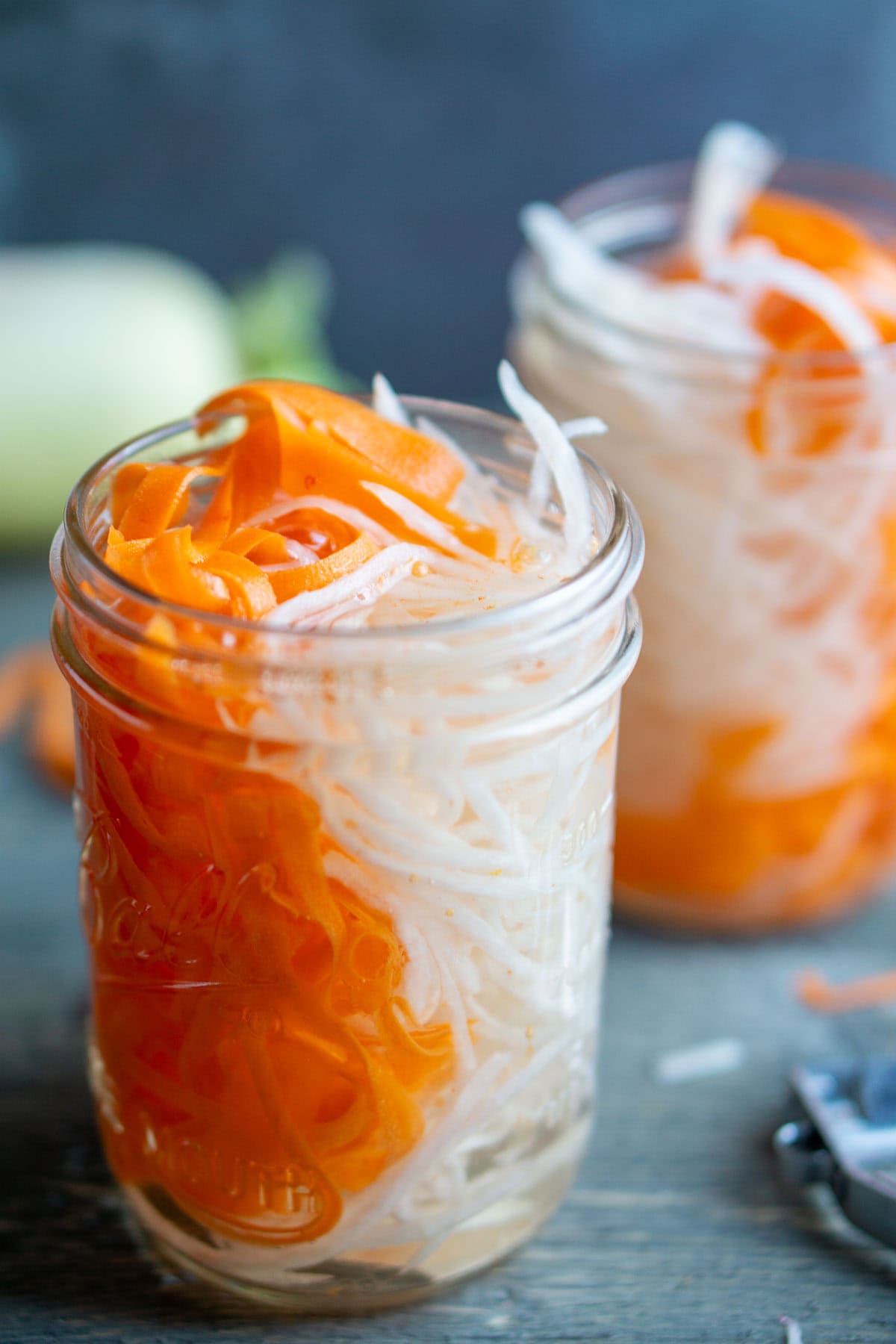
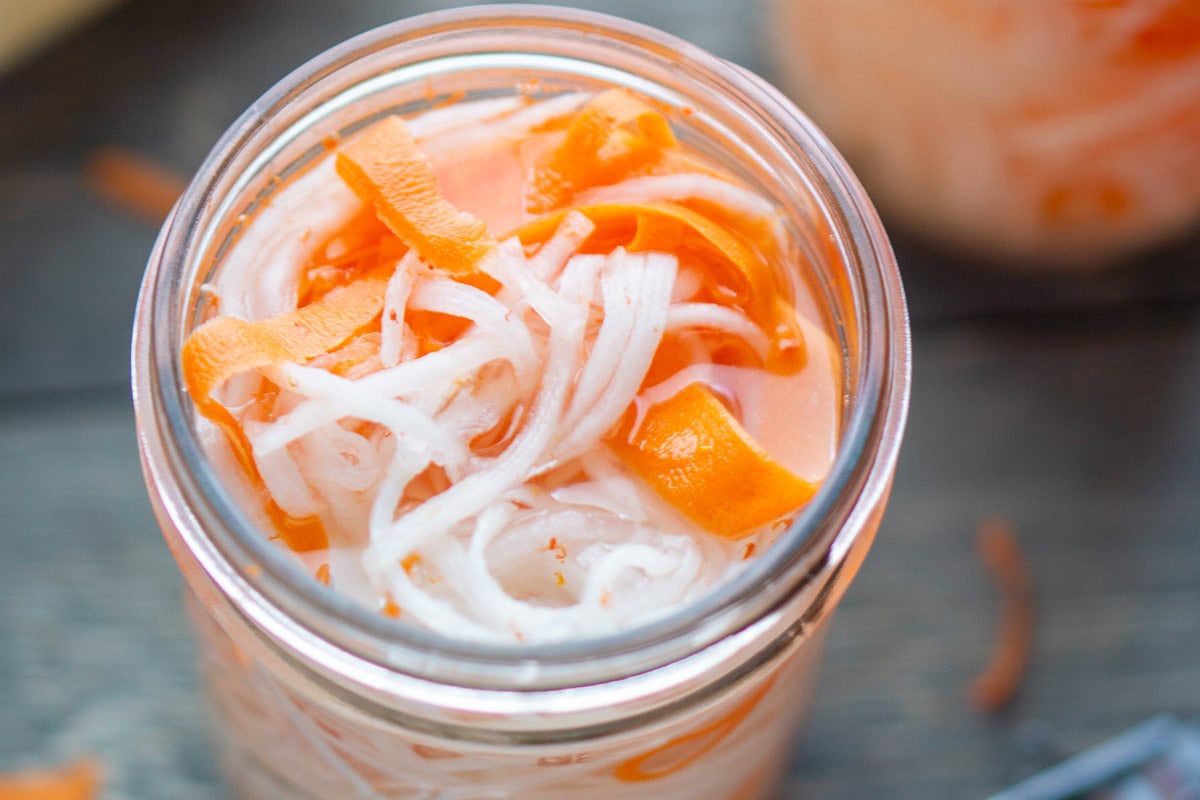
Let cool to room temperature, then refrigerate. Use after a few hours, but for best flavor, cover and let it soak overnight. The taste improves over time—up to 2 weeks.
Recipe Tips
- Cut the carrots and daikon any way you prefer—julienne strips, matchsticks, or thin ribbons all work. Just aim for consistent sizes so they pickle evenly.
- Use a glass jar or deli round container. Just make sure it’s clean. No need to sterilize like you would for canning—these are quick pickles.
- Don’t skip cooling the brine. Let the brine rest for 5 minutes after boiling to prevent cracking your jar and help the veggies stay crisp.
- Pack the jar gently. Avoid overstuffing. Lightly packed veggies allow the brine to flow and coat everything evenly.
- Adjust sweetness if needed. Taste the brine before using. You can reduce the sugar if you prefer a less sweet pickle.
- Wait for flavor to develop. While the pickles can be eaten right away, they’re best after chilling for a few hours—or even better, overnight.
Tools I use for this recipe
- cutting board and chef's knife (if cutting by hand)
- julienne cutting tool or vegetable peeler or shredding tool of choice
- 2 quart saucepot or microwave-safe bowl
- mason jars with plastic lids
More Asian Recipes
📖 Recipe
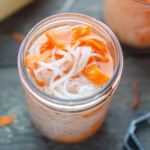
Quick Pickled Carrots and Daikon
Want to Save This Recipe?
Enter your email & I'll send it to your inbox. Plus, get great new recipes from me every week!
By submitting this form, you consent to receive emails from The Kitchen Girl.
Video
Note about scaling
When scaling, the light gray ingredient notes after the comma don’t change. Adjust as needed.
Ingredients
- 2 medium Carrots, about ¼ pound
- 1 (4-inch chunk) Daikon Radish, about ¼ pound
- ¼ cup White Vinegar
- ¼ cup Rice Vinegar
- ½ cup Water
- ¼ cup Sugar
- ½ teaspoon Salt
Instructions
- Julienne or ribbon-peel the CARROTS and DAIKON RADISH using a knife, julienne tool, or vegetable peeler.
- In a 2-quart saucepan, bring WHITE VINEGAR, RICE VINEGAR, and WATER to a boil. Remove from heat and stir in SUGAR and SALT until dissolved.(Microwave option: Heat vinegars and water in a microwave-safe bowl until nearly boiling, then stir in sugar and salt.)
- Pack the CARROTS and DAIKON into a sterile 1-pint mason jar.
- Pour in the brine and cool to room temperature. Use after a few hours, but for best flavor, cover and let it soak overnight. The taste improves over time. Refrigerate up to 2 weeks.
Recipe Notes
Equipment
- chef's knife, vegetable peeler, or julienne tool
- 2-quart saucepan or microwave-safe bowl
- Pint-sized mason jar or 2 (1-cup) mason jars
Nutrition information is an estimate and may vary depending on the brands, ingredients, and portion sizes used.


Sarah says
I love this recipe! It's been my go-to for Bulgolgi bowls. I make it in the afternoon, first round consumed at dinner which is a refreshing and lightly pickled carrot. The following days for leftovers are even better.
Traci says
Ahhhh yes! We love it for various Asian bowls too, Sarah 🙂 I'm so glad you're enjoying the recipe. Thank you for taking the time to leave a review. Much appreciated!
Tim says
Directions were easy to follow. I prefer the thicker cut. After two hours, tasted great. Will wait overnight to try in banh mi
Traci says
I'm so glad you're enjoying the recipe, Tim 🙂 And yep, you can cut them however you like. Enjoy your banh mi! And thanks for the review!
Friedrich says
Hkw do i follow a recipe thst doesnt have quantities? How much salt, vinegar, etc?
I know asian style is to cook by feeling.But I need some guidance of quantities not just ingredients
Traci says
Hey Friedrich... not sure what you mean. The recipe card includes all ingredient quantities and instructions. You may have missed it further down the page. The “Jump to Recipe” button at the top will take you straight there 🙂
SC says
Excellent!
Traci says
Yay! I'm so glad you're enjoying it! I made it this week too and making more for next week. Can't get enough. Thanks for the feedback 🙂
Keri says
Such an easy recipe! I made it two days before serving, and it was delicious. All six of us loved it! Just let it air out before serving because the smell is quite strong, but flavor is great!
Traci says
Yay!! I'm so glad everyone enjoyed it! Thank you for bringing my recipe into your kitchen. Truly appreciate the feedback. Cheers! xoxo